

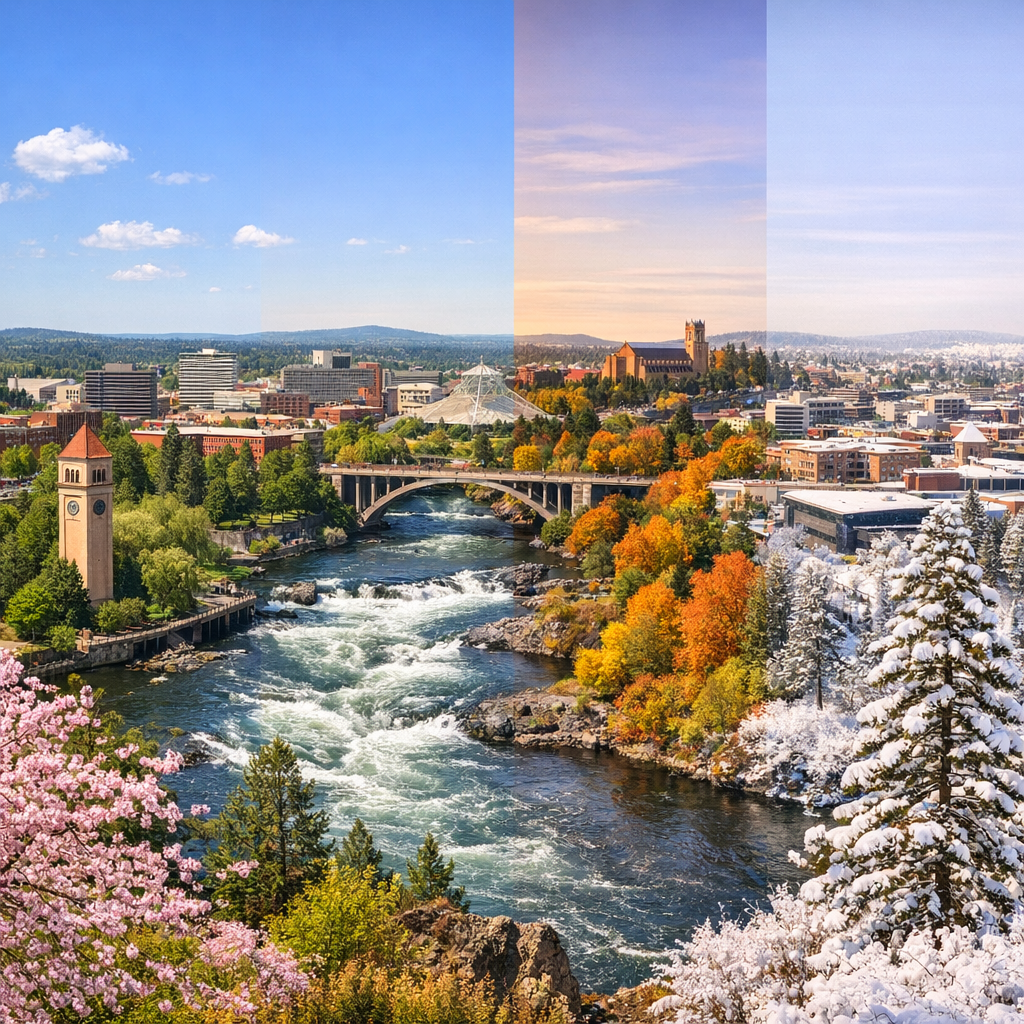
Spokane, Washington, experiences a diverse climate characterized by four distinct seasons, each offering unique weather patterns and challenges. Understanding these seasonal variations is essential for residents and visitors alike.
Winter: Cold and Snowy
Winter in Spokane is marked by cold temperatures and significant snowfall. Average lows in January hover around 25.4°F (-3.7°C), with highs reaching approximately 36.6°F (2.6°C). The city receives an average annual snowfall of about 44 inches, transforming the landscape into a winter wonderland. However, residents should be prepared for occasional extreme cold snaps, with temperatures sometimes dropping below 0°F (-18°C).
Spring: Mild and Wet
As winter recedes, Spokane transitions into a milder and wetter spring. March sees average highs of 50.5°F (10.3°C) and lows of 30.3°F (-0.9°C), with precipitation averaging around 2 inches. By May, temperatures rise to an average high of 68.5°F (20.3°C), accompanied by increased rainfall, making it a lush and vibrant season.
Summer: Warm and Dry
Summers in Spokane are typically warm and dry, with July being the hottest month. Average highs reach 86°F (30°C), while lows are around 54.3°F (12.4°C). Rainfall is minimal during this period, averaging less than half an inch, creating ideal conditions for outdoor activities.
Autumn: Cool and Crisp
Autumn brings cooler temperatures and a gradual increase in precipitation. September averages highs of 75.8°F (24.3°C) and lows of 45.4°F (7.4°C). By November, temperatures drop to an average high of 45°F (7.2°C) and a low of 30.6°F (-0.8°C), with rainfall increasing to about 2.24 inches.
Climate Change Impacts
Recent studies indicate that Spokane’s climate is undergoing noticeable changes. Since 1950, average annual temperatures have increased by 2°F, with peak August temperatures rising by 3.5°F since 1979. Projections suggest that summer temperatures could increase by another 3.6°F by 2049. These changes may lead to more frequent and intense heatwaves, posing challenges to public health and infrastructure.
Understanding Spokane’s climate patterns and the potential impacts of climate change is crucial for developing effective strategies to enhance the city’s resilience and ensure the well-being of its residents.