

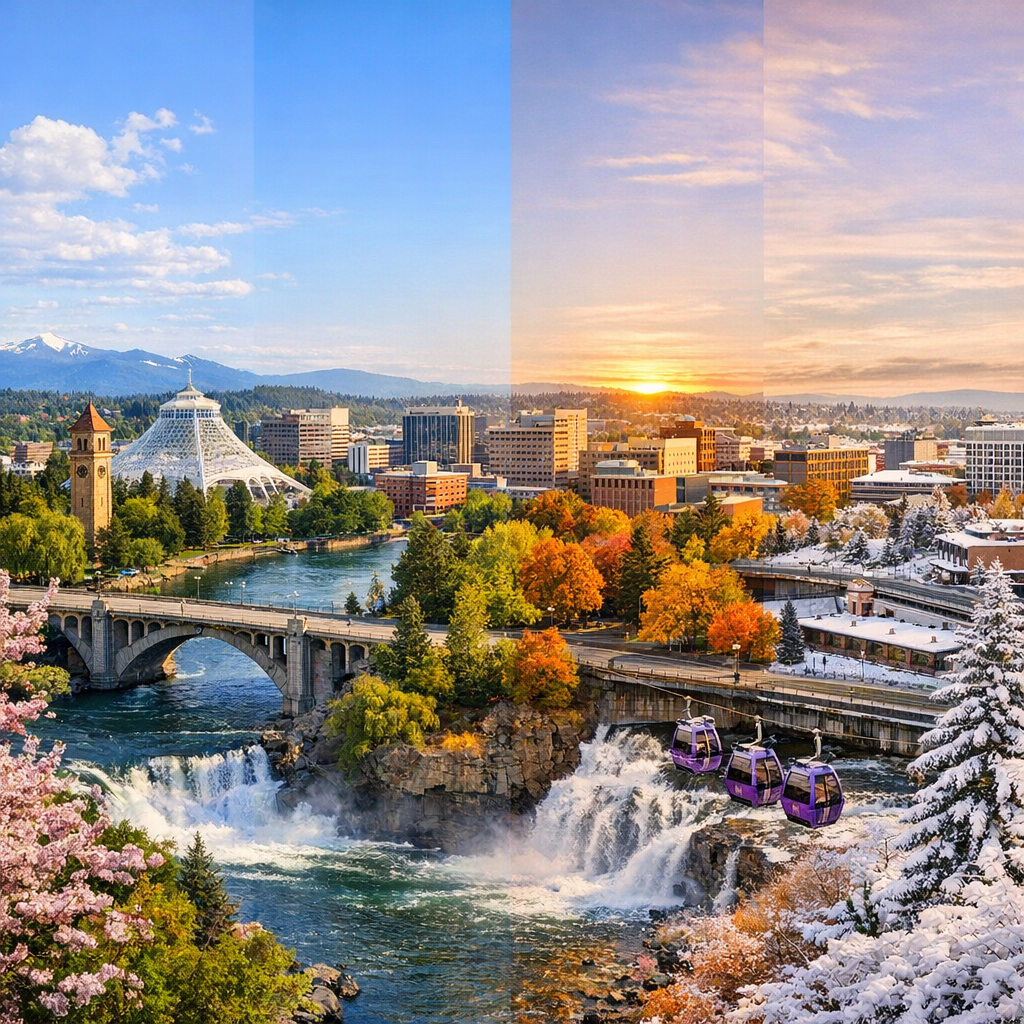
Spokane, Washington, offers residents and visitors a diverse climate characterized by four distinct seasons, each bringing its own unique weather patterns and opportunities for outdoor activities.
Spring: A Season of Renewal
Spring in Spokane is marked by gradually warming temperatures and increasing daylight. Average high temperatures rise from 51°F (11°C) in March to 69°F (21°C) in May. Precipitation during this period averages around 1.5 inches per month, contributing to the blooming of local flora and the greening of the landscape. This season is ideal for enjoying Spokane’s numerous parks and outdoor spaces as they come to life after the winter months.
Summer: Warm and Dry
Summers in Spokane are typically warm and dry, with average high temperatures peaking at 87°F (31°C) in July. The city experiences low humidity during this time, making the warmth more comfortable. Rainfall is minimal, averaging about 0.5 inches in July, which contributes to the arid conditions. These months are perfect for outdoor activities such as hiking, biking, and exploring the Spokane River. However, it’s important to stay hydrated and be mindful of sun exposure during the hotter days.
Autumn: Crisp and Colorful
Autumn brings cooler temperatures and vibrant foliage to the Spokane area. Average high temperatures decrease from 76°F (24°C) in September to 45°F (7°C) in November. Precipitation begins to increase, averaging around 1.4 inches in October. This season offers a picturesque setting for outdoor activities like hiking and visiting local orchards. It’s also a time to prepare for the upcoming winter by ensuring homes and vehicles are ready for colder conditions.
Winter: Cold and Snowy
Winters in Spokane are cold and snowy, with average high temperatures around 37°F (3°C) in December and average lows dipping to 26°F (-3°C). The city receives an average annual snowfall of approximately 44 inches, providing opportunities for winter sports such as skiing and snowboarding in nearby areas. Residents should be prepared for winter driving conditions and ensure their homes are equipped to handle the colder temperatures.
Geographical Influences
Spokane’s climate is significantly influenced by its geographical location. Situated between the Cascade Range to the west and the Rocky Mountains to the east and north, the city is protected from some of the more extreme weather patterns experienced in other parts of the Pacific Northwest. The Cascade Mountains act as a barrier to moist air from the Pacific Ocean, resulting in Spokane’s relatively low annual precipitation of about 17 inches. This rain shadow effect contributes to the city’s drier climate compared to coastal regions.
Understanding Spokane’s climate patterns can help residents and visitors make the most of each season, whether it’s enjoying the summer sun, preparing for winter snow, or appreciating the beauty of spring and autumn transitions.