

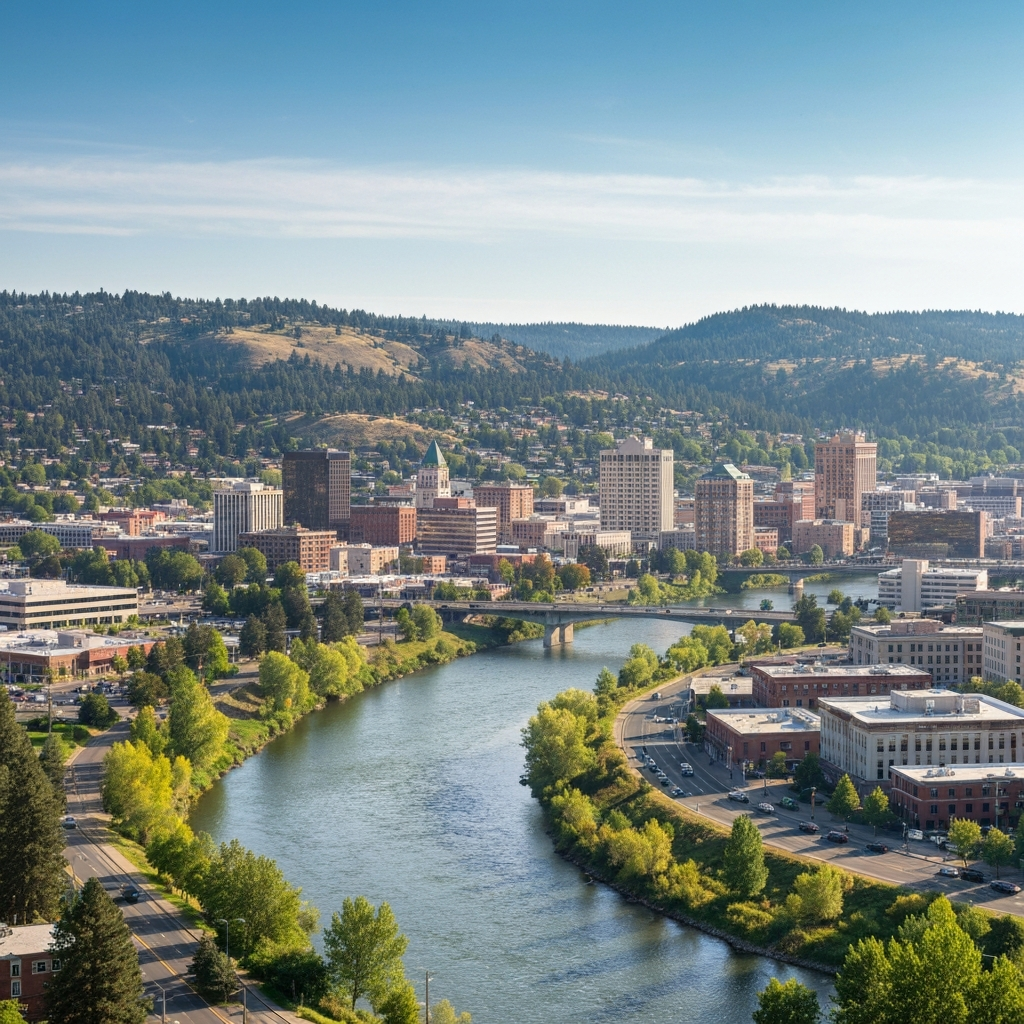
Spokane, located in Eastern Washington, experiences a unique climate influenced by its geographical position between the Cascade and Rocky Mountain ranges. This setting results in distinct seasonal variations that residents and visitors alike should understand.
Seasonal Overview
Winter
Winters in Spokane are notably cold, with average low temperatures around 26°F (-3°C) in December. Snowfall is common, averaging approximately 44 inches annually, which is higher than the national average of 28 inches. This substantial snowfall contributes to the region’s winter sports culture and picturesque landscapes.
Spring
Spring brings a gradual warming trend. By late May, temperatures typically rise into the mid-60s°F (around 18°C). This season is characterized by mild and pleasant weather, making it ideal for outdoor activities as the snow melts and the flora begins to bloom.
Summer
Summers are warm to hot, with temperatures often reaching into the mid-90s°F (35°C) from July through September. Despite the heat, Spokane’s summer climate is relatively dry, with minimal rainfall during these months. The city averages 171 sunny days per year, providing ample opportunity for outdoor recreation.
Autumn
Autumn is usually dry and cool, with temperatures in the mid-50s°F (around 13°C) by late October. The crisp air and changing foliage make this season particularly scenic in the Spokane area.
Geographical Influences
Spokane’s climate is significantly influenced by its location between the Cascade and Rocky Mountain ranges. The Cascade Mountains to the west act as a barrier, reducing the amount of moist air from the Pacific Ocean that reaches the area. This rain shadow effect results in Spokane receiving an average annual precipitation of 16.5 inches, less than half of Seattle’s 39.3 inches. The Rocky Mountains to the east and north provide some protection from the coldest air masses moving southward from Canada, moderating winter temperatures to some extent.
Environmental Considerations
In recent years, Spokane, like much of the western United States, has experienced drier conditions and more frequent and larger wildfire events during the summer season. The fine particulate matter in the smoke can be carried by the wind, blanketing the region in a haze and impacting Spokane’s air quality. Residents are advised to stay informed about air quality levels, especially during the peak of wildfire season.
Understanding Spokane’s climate patterns is essential for residents and visitors to plan activities and be prepared for the seasonal changes that characterize this unique region.